Achievements · April 5, 2025
OYSTER Hack4Health – Best Pitch Award
A 46-hour MedTech hackathon in Oulu where our cross-functional team won Best Pitch for a wearable-based glucose prediction concept.
Field metadata
Category
Achievements
Date
April 5, 2025
Location
Oulu, Finland
Event
OYSTER Hack4Health Hackathon
Duration
46 hours
Result
Best Pitch Award
Team
Biomedical Engineering · Nursing · DevOps
Story
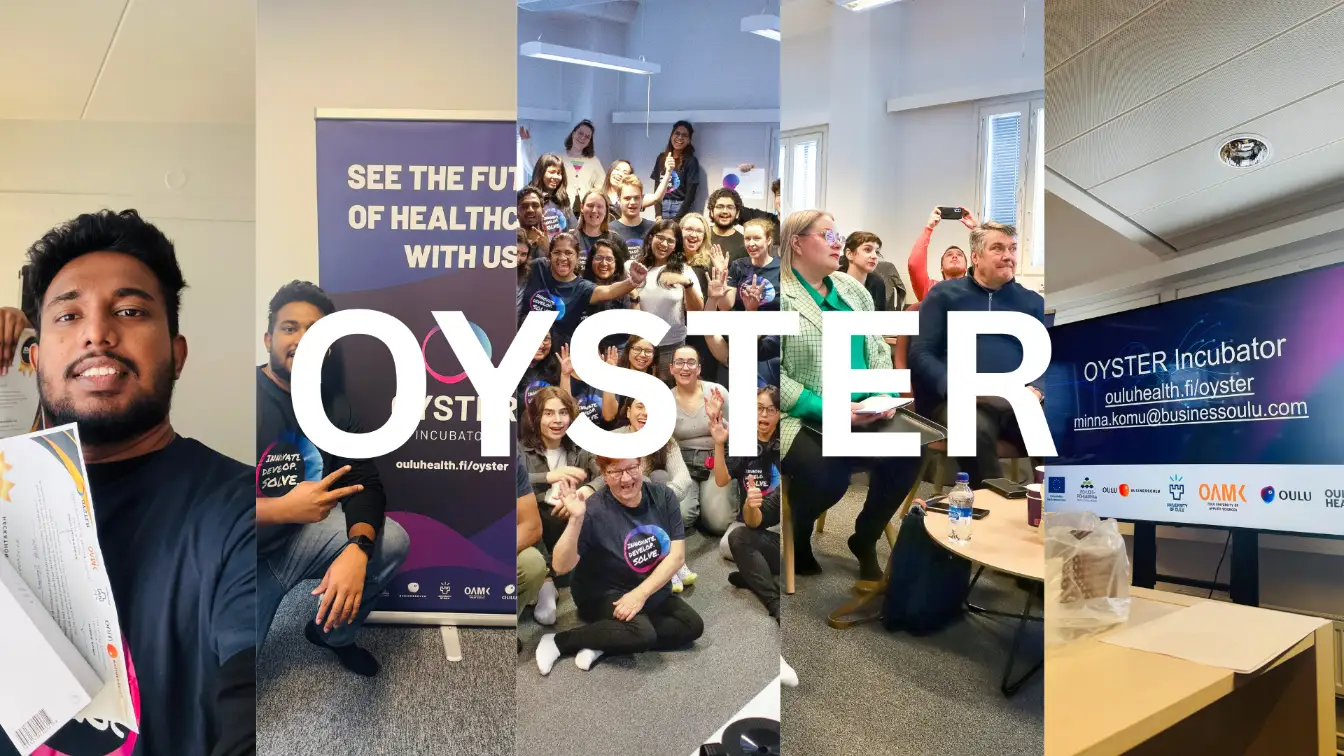
The weekend started with a simple challenge: take a health problem, form a team, and turn an idea into something convincing within a short, intense window. The OYSTER Hack4Health Hackathon in Oulu brought together people from healthcare, technology, business, and research to work on real health and wellbeing challenges. By Sunday, we had been through team formation, mentoring, prototyping, and a final pitch. Our team mixed biomedical engineering, nursing, and DevOps, which helped us look at the problem from both technical and human angles.
We focused on a MedTech idea built around something many people already use every day: wearable devices. Instead of creating new hardware, we explored how existing devices such as Apple Watch, Samsung, and Garmin wearables could support non-invasive blood glucose trend prediction. The concept was to analyse time-series patterns from sensor signals, especially changes in light absorption over time, and use those patterns to estimate glucose trends within a useful threshold. The goal was not to replace clinical measurement, but to provide earlier insight into changes that could support better day-to-day health awareness.
The 46 hours moved quickly. We refined the problem, shaped the technical approach, discussed the clinical value, and worked on turning the idea into a clear story. My role was to help connect the technical side with a practical product direction: how the system might work, how data could flow, how the solution could be positioned, and how the pitch could communicate both feasibility and impact. As the deadline came closer, the challenge became less about adding more ideas and more about making the message sharper.
When we presented, the pitch focused on the potential impact: using accessible consumer wearables to give people earlier visibility into glucose trends without adding friction to their lives. Winning the Best Pitch Award was a proud moment because the judges understood the idea quickly and cared about the problem. I left the event with a simple lesson: a rough idea becomes much stronger when the team can explain who it helps and why it matters.
Share this entry
Share on LinkedInShare on XGallery